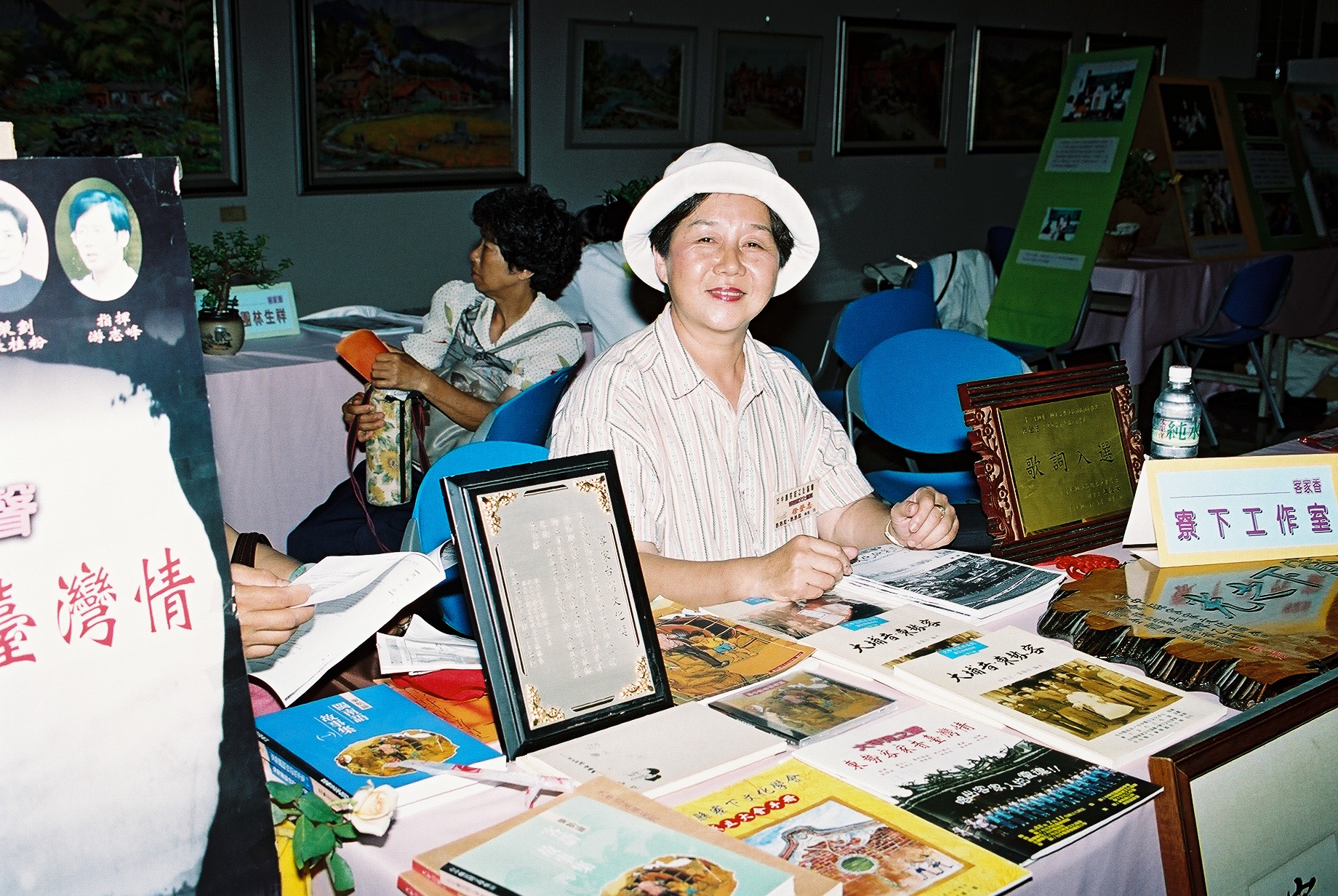
Chinese Name: 徐登志
Born: 1944
Birthplace: Taichung
(Central Taiwan)
Born in 1944 in Dongshi Township, Taichung County (now the Dongshi
District of Taichung City), Hsu Teng-chih is a classic Taiwanese Hakka woman
with a strong and unpretentious temperament. After finishing her studies at the
Taichung Normal School (today’s National Taichung University of Education), she
returned to her hometown to serve as a teacher. She taught Hakka at the Zhongke
Elementary School and Dongshi Elementary School for more than 30 years, and has
won honors such as the Excellent Teacher Award.
After retiring from Dongshi Elementary School, Hsu devoted herself to
Hakka affairs and cultural heritage promotion, introducing Hakka culture to
younger generations and helping revitalize and extend the lifeline of Hakka
culture. Hsu hopes that future generations can speak with the Hakka accent of
the Dongshi region fluently, correctly, and with dignity. As a result of her
devotion to promoting Hakka and culture, she is known in the local
area as a fantastic Hakka woman.
Hsu pointed out that the Hakka accent in the Dongshi area is different
from Sixian (四縣), Hailu (海陸), Raoping (饒平), and Zhaoan
(詔安) — the four
major forms of Hakka in Taiwan. As part of the Guangdong Dapu (廣東大埔) linguistic
group, which is quite special in tone, this version is only found in Taichung’s
Dongshi, Shigang, Xinshe, and Heping regions, and parts of Zhuolan Township in
Miaoli County.
For more than 20 years, Hsu has participated in many folk and literary programs
supported by the Ministry of Culture and Taichung City Government, including those
involving research, songs, stories, and field investigations related to the
Hakka, and has promoted Hakka affairs with great efforts and
achievements.
Hsu is also very enthusiastic about local education. Since 1993, she has
participated in the recording of folk literature in Taichung. She has also published
“The Story of Dongshi’s Hakka Accent,” “Songs in Dongshi’s Hakka Accent,” “The Hakka
Songs of Taichung,” “Teacher Hsu’s Ancient Poems,” “Dongshi’s Hakka Accent and Guangdong
Dapu Pronunciation,” “Nursery Rhymes in Dongshi’s Hakka Accent,” and “Six Hakka
Nursery Rhymes.”
Besides publishing these works, she has also promoted mother-tongue
teaching in Dongshi Elementary School and helped with the school’s teaching of Hakka
nursery rhymes to students. In addition to compiling dozens of folk tales,
slang, riddles, Hakka-language dictionaries, Hakka-language textbooks, and
recording materials, she has also established the Dajiahe Voice Choir (大甲河之聲合唱團) and the
Liao Xia Ren Theatre Troupe (寮下人劇團), integrating Dapu’s cultural elements with music
and drama. She also frequently gives public performances and endeavors to
diversify Dapu’s Hakka culture.
In 1995, Hsu further promoted the work of spreading Hakka culture with
several local residents who were also enthusiastic about Hakka culture.
Together they founded the Taichung City Hakka Culture Association (台中市客家文化協會) and
established the Liaoxia Studio (寮下工作室) using Dongshi’s old place name “Liaoxia (寮下).”
Hsu witnessed the changes in Dongshi after the Sept. 21 earthquake of 1999 and found that following the disaster, more and more people moved away while the remaining population aged rapidly. The loss of language and culture in Dongshi accelerated as a result, and this worried her. In addition to post-quake restoration work, Hsu has emphasized that it is her greatest wish to leave a record of Dongshi’s Hakka accent, which is spoken by approximately 120,000 people in the area, before it completely disappears. For her contributions to Hakka affairs and cultural research, Hsu was recognized by the inaugural Hakka Contribution Award in 2007.